Violi case still resonates
Published 6:00 am Sunday, March 8, 2026






The abduction of Morgan Violi in broad daylight nearly 30 years ago as she walked with a friend in the parking lot of a Shive Lane apartment complex touched off an incomprehensible ordeal for her family and had a jarring effect on the community at large.
With the announcement last week that a suspect has been identified and charged with kidnapping that resulted in 7-year-old Morgan’s death, some long-sought answers have arrived, but the crime remains unsettling for those who knew Morgan and those who worked first at locating her and then finding her abductor.
“After that happened, I think everybody had a big fear of that happening to their child or grandchild – the thought of it now turns my stomach,” said retired Bowling Green Police Department Chief Bill Waltrip.
When Morgan was abducted on July 24, 1996, from what was then known as Colony Apartments, Waltrip was a BGPD captain who oversaw criminal investigations.
City police officers were the first law enforcement to respond after the abduction was reported, and as police spoke with eyewitnesses and got a description of the abductor and the van he was driving, the scope of the investigation broadened.
The FBI soon became involved, and the early stages of the investigation focused on finding Morgan, and the search for her and her abductor soon went nationwide, with TV show America’s Most Wanted airing segments about the case and Bowling Green and Warren County governments offering cash rewards for information leading to her safe return.
Morgan’s mother and father, Stacey and Glen Violi, were pictured in the July 25, 1996, Daily News and described as struggling to keep their emotions in check as they processed the unfolding tragedy.
“I’m wondering where my baby is,” Stacey Violi said in that July 25 story, the first Daily News account of the case.
News accounts in the intervening days reported details of the ongoing investigation and revealed the impact of Morgan’s disappearance on the community.
Hundreds attended a candlelight vigil that ended outside Morgan’s apartment, according to a July 26, 1996, Daily News report.
Rev. Steve Ayers of Hillvue Heights Church, who ministered to the Violi family, made an appeal for Morgan’s safety.
“We’re going to pray whoever this person is that would engage in such a hideous, evil act, that somewhere there is still a minute conscience that would turn from this deed and correct this thing,” Ayers said in a Daily News report of the vigil.
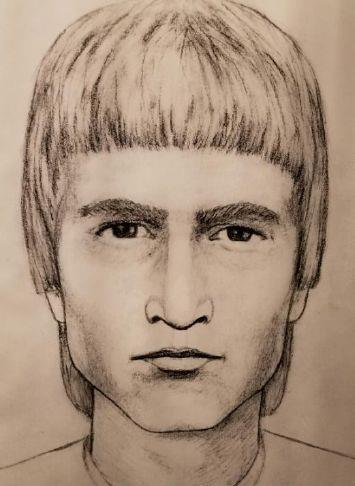
For weeks afterward in the newspaper, Morgan’s picture and a paragraph describing her clothes and physical characteristics appeared alongside a police sketch of the man suspected of grabbing her and putting her in his van, which was found abandoned on July 26, 1996, in Franklin, Tennessee, and determined to have been stolen from Ohio.
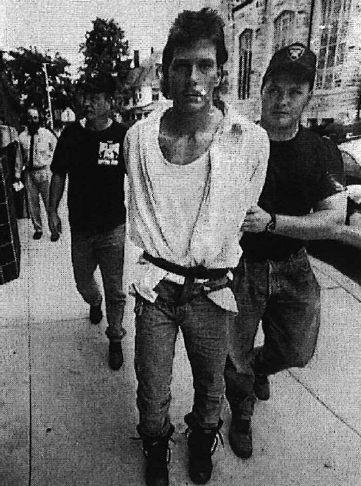
That sketch strongly resembles a picture of Robert Scott Froberg taken shortly after his October 1996 arrest in Pennsylvania.
Police at the time sought Froberg for having escaped from prison in Alabama, but it would be another 30 years before investigators would establish a connection between Froberg and Morgan, thanks to DNA profiling of a hair recovered from the van believed to have been used in the abduction.
Waltrip spoke frequently with Stacey Violi while he was actively involved in the investigation and kept in contact with her for several years after his retirement, saying that he remains struck by the grief that Violi has felt.
“Just thinking about the family, this never goes away,” Waltrip said. “From a personal standpoint, I was very relieved and I’m sure they’re relieved that an arrest was made…as good as that is, they still lost a daughter and a sister. A lot of us have a lot of tragedies in our lives with family and friends, but this was difficult to comprehend and it really changed our community.”
For some, the abduction served as something of a cautionary tale – the Colony Apartments manager told the Daily News in a July 30, 1996, report that he suspected there would be fewer instances of children at the complex going unsupervised going forward.
Others shared their memories of Morgan as an outgoing kid with a big personality.
An Aug. 8, 1996, Daily News report described Morgan as an “effervescent young girl who took great delight in entertaining others” and noted that she impressed at a school talent show with a gymnastics routine set to music.
That same report also cited an evaluation of Morgan from her primary teacher at Warren Elementary, who described her as a “good little student with a mind of her own.”
Wes Violi, Morgan’s grandfather, said in that same story that his granddaughter was “just bubbles all of the time.”
Morgan’s body was found Oct. 20, 1996, in White House, Tennessee by a woman walking near a wooded area.
Several days would pass before forensic testing officially confirmed the remains to be those of Morgan, but a yellow hair barrette and other items found at the scene left little room for doubt.
In the aftermath, the community reacted to Morgan’s death like a gut punch, with Stacey Violi feeling the pain most acutely.
In a 2006 Daily News story, Violi said that three or four years passed before she and her daughters could even bear to have pictures of Morgan on display in their home.
“That’s the day I lost my faith in the human race,” Stacey Violi said in that 2006 report. “I never realized there was anyone that evil who could just take her and do that.”
The grief and anger associated with the tragedy persisted, and family members continued over the years to encourage anyone with information to come forward.
“I want that person found,” Stacey Violi said in a 2022 Daily News story. “There’s not anything on God’s green earth that the justice system or anyone could do to this person that will equal up to what they’ve done to Morgan, to me, to my daughters, my family.”
Waltrip said that he remained privy to some information law enforcement received over the years, and whenever someone called him after retirement with an item that he thought would help the investigation, he would pass it along to whoever was currently involved in the case.
“It just doesn’t leave your psyche,” Waltrip said. “The longer that these things go on, you have a tendency to lose hope you’ll ever find out anything.”



Best of Best Winners