Heyungs terminated by WCSO, will appeal ruling
Published 1:00 pm Thursday, February 26, 2026
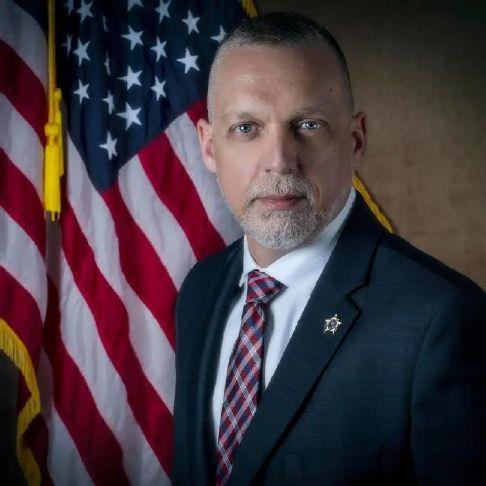
Mark Heyungs, a candidate in the Republican primary for Warren County Sheriff against current Sheriff Brett Hightower, has been fired as a deputy by the WCSO following an administrative hearing.
A ruling issued Tuesday by Hightower found Heyungs guilty of eight charges brought against him in termination proceedings, all charges deemed to have been violations of written WCSO policies.
Heyungs posted a video to the Facebook page for his election campaign on Wednesday saying that the decision to fire him was not a surprise since Hightower had supported a termination notice drafted by Chief Deputy Maj. Kevin Wiles before Heyungs contested the notice by requesting the administrative hearing, which took place over two days earlier in February at the Warren County Justice Center.
Heyungs maintained that the allegations against him to support his firing were “pretty baseless” and that he would appeal the termination to the Warren Circuit Court.
“I don’t think any judge could look at this and say there’s any misconduct whatsoever,” Heyungs said in the video. “I’ve always followed the law … it’s disturbing to me that this sitting sheriff who swore to uphold the law has failed to do so. That’s a problem, and unfortunately there’s really only one way to fix it and that’s as an elected official.”
Within days of receiving the termination notice in December, Heyungs was suspended without pay.
Under state law, Hightower presided as ruling authority at the administrative hearing, and Heyungs requested that the hearing be open to the public.
A memorandum outlining Hightower’s findings of fact determined that Heyungs’ performance in the office began to suffer shortly after his promotion to sergeant in early 2025.
Heyungs joined the office as a patrol deputy in 2021, was transferred to criminal investigations and appointed a detective in 2024, after which he asserted a hostile work environment claim to Wiles.
The infractions that formed the basis for Heyungs’ firing occurred over an 11-month period in 2025 and included, among others:
– Failing to report his location over radio while chasing down a suspect on foot. Wiles testified at the administrative hearing that Heyungs provided inaccurate information regarding his location during the March 21 pursuit and did not answer subsequent radio calls from his fellow deputies, which prompted an “uncharacteristically and unnecessarily large law enforcement response” to the area where the suspect was arrested.
– Violating the Constitutional rights of a man who spoke with Heyungs as the deputy investigated a yard sale at a Glen Lily Road residence on May 17.
Hightower found that Heyungs remained at the residence “longer than was necessary to establish that there was no criminal activity afoot.”
The interaction between the man and Heyungs took place on the front porch of the residence, after Heyungs stopped there while on patrol when he suspected that stolen merchandise was being sold.
The man, who was detained, refused to identify himself and recorded the interaction on a cell phone, and the video was later posted online, which led to the office fielding hundreds of calls and emails from people critical of Heyungs’ actions.
WCSO mandated remedial training on Constitutional law for its deputies in the aftermath of the incident, and Hightower found that Heyungs’ “unsupported hunch that there might have been criminal activity” was insufficient to justify his actions at the yard sale.
– Failing to secure the scene at a homicide investigation on Sept. 13 at Eastern Heights. Wiles testified that Heyungs was the ranking officer at the crime scene for 28 minutes until a higher-ranking officer arrived, and Hightower, who later responded himself and directed officers at the scene, found that Heyungs acted out of step with “training, protocol and common sense.”
– Unlawfully seizing the cell phone of a motorist that Heyungs had stopped for a pair of moving violations on Dec. 7.
Heyungs learned that the driver was the subject of a criminal summons charging him with attempted voyeurism and served him with the summons. The driver handed over his cell phone after Heyungs asked to see it, and the deputy later passed it along to the Western Kentucky University Police Department, which investigated the attempted voyeurism allegation.
Hightower found that the cell phone owner did not clearly articulate his consent to enable Heyungs to seize the phone, and that the attempted voyeurism allegations were based on activity that occurred nine months before the traffic stop, and Heyungs wrongfully assumed that a phone mentioned in the criminal summons was the phone that the deputy seized and provided to WKUPD.
WKUPD Chief Mitch Walker testified that, while he accepted the cell phone, he misunderstood how a WCSO employee came to have possession of the phone and returned it to its owner after learning that it had been unlawfully seized.
In a separate document addressing objections raised by Heyungs’ attorney, David Agnew, Hightower noted that Heyungs’ candidacy for sheriff was not considered as a factor in terminating the deputy.



Best of Best Winners