With Pre-K for All in the spotlight, many Superintendents sign on
Published 5:00 am Saturday, February 14, 2026
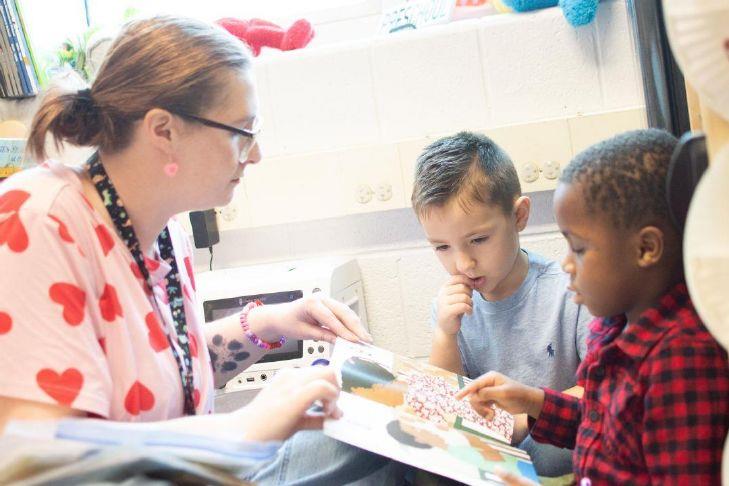
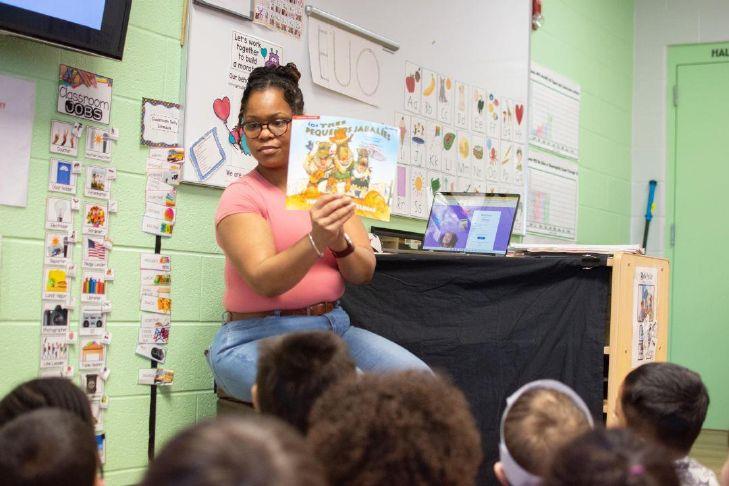

More than half of school district superintendents statewide are urging the General Assembly to support expanding Kentucky’s voluntary publicly-funded preschool initiative, called Pre-K for All.
“We urge the General Assembly to make expanding Pre-K access for all Kentucky four-year-olds a top priority in the 2026 Budget Session,” the letter states. “We are in classrooms every day, so we know — Pre-K works. But right now, only 14,000 of Kentucky’s 54,000 four-year-olds have access to it.”
Published last week, the 93-signature letter includes superintendent signees across southcentral Kentucky at the districts of Warren County Public Schools, Logan County Public Schools, Butler County Schools, Allen County Public Schools, Caverna Independent Schools and Edmonson County Public Schools. Gov. Andy Beshear in summer created an advisory committee of leaders in education, childcare, workforce development and government to study successful models of state-funded pre-K programs for recommendations to the governor and General Assembly.
Democratic legislators proposed House Bill 572 and 574 as well as Senate Bill 165 and 166 this week to expand Pre-K access, Gov. Andy Beshear said. The Republican-led House in late January proposed its own budget with no funding for Pre-K for All after Beshear presented one earlier that month that had included funding for an initial Pre-K for All phase.
Beshear’s initial phase, if implemented, would include a recurring $40.5 million for fiscal year 2028 from the state’s sports wagering excise tax to provide 9,683 4-year-olds the chance to attend half-day pre-K at districts that express their readiness, giving districts six years to offer the program, according to program director Sam Flynn. It also proposes a one-time $10 million for a data system to track their performance throughout school compared to those with private childcare and no childcare.
Expanding preschool access would require a substantive change to the eligibility criteria written into the law, as well as funding to support it, Flynn said. He added that they’ve met with members of the house appropriations committee, including the chairman Jason Petrie, Thursday, to go over details of the plan; Flynn added that they’ve met with more than 100 members of the legislature so far, including House Speaker David Osborne, on the governor’s budget proposal and how it could be implemented.
Proponents say it’ll increase kindergarten readiness, grow the labor force, boost take-home pay for parents, save families on childcare costs, grow the economy and eliminate childcare deserts. Opponents have expressed concern about costs and sustainability, as well as a potential to squeeze out the private childcare market. There’s also the concern that other educational priorities should be budgeted for that are more realistic for the General Assembly to pass.
Warren County Public Schools serves more than 800 preschoolers, but still sees a much greater need than it’s able to serve — and for WCPS, providing it is a top priority, according to the district Superintendent Rob Clayton.
“The research is very clear that birth to 5 is an extremely important developmental part for adolescence, their brain development — and when students come to us kindergarten ready, they excel in our schools,” he said. “We have the data that reflects when students are ready, the vast majority do excel in our schools.”
Two primary indicators that lead to struggle for WCPS students, he added, are that the vast majority don’t enter school ready — and students who aren’t kindergarten-ready very much struggle to keep up with their same-age peers, he said.
“The expertise required from our teachers and support staff to help students catch up after starting school not kindergarten-ready is significant, and that is why we are so passionate about being able to intervene prior to kindergarten,” he said.
Gary Fields, superintendent of Bowling Green Independent School District, said the financial cost of what Pre-K for All calls for doesn’t line up with what the district is seeing from the state budget so far this session — and that more realistic district needs should take priority.
“We have so many needs that that discussion of that amount of money can’t supersede the ongoing pressing needs we have right now,” he said. “If we were told we were going to Pre-K for All next year or in five years, we would have a lot of hurdles to overcome.”
The district would need another 10-12 classrooms at a time it barely has space for the 165 pre-K students it serves, Fields said. BGISD would also need 10-12 more teachers, when there aren’t enough pre-K teachers produced by the university system — as well as other staff such as instructional assistants, he said.
If the state provided some $10 million for extra classrooms and funding for more teachers, then they could probably pull it off, he said. But he’d be concerned for the communities where pre-K teachers are harder to find — and in his mind, as more realistic needs remain, the conversation around pre-K for all should be talked about more so as a more long-term dream with an extensive, many-step process for getting there.
“If I’m going to put my name forth as part of this district to encourage our legislators to do things, I have a long list of things well before this ask to help the students in our district … more realistic things that I think that we may have a chance to get in a budget and is more affordable,” he said.
Asked about these concerns, Clayton said that he understands and shares many of them. He added, though, that for the district, there’s strong support for the overarching initiative.
“We firmly believe as an organization that nothing is more important than students getting off on a good start — because we see, again, the amount of resources that are put in on the backend,” he said. “Even though the governor’s plan is not one which we could implement immediately, I see it as a positive step forward in getting folks to recognize and understand the research is very clear … and that is, early education — more specifically universal preschool — is a critical piece to student success.”
Just over half of judge-executives also previously signed onto letters of support last year for Pre-K for All, as well as 34 mayors and 46 local and regional chambers of commerce.
Barren County Judge-Executive Jamie Bewley Byrd in October stated that expanding access to high-quality preschool, beyond investing in children, strengthens the workforce, grows the local economy and gives children a chance to succeed.
“Across Barren County, I hear from working parents, educators, and employers about the ongoing struggle to find affordable, reliable childcare,” she stated. “For many families, the lack of access to early learning opportunities is keeping parents out of the workforce entirely.
“By making Pre-K available to all four-year-olds — including those who currently do not qualify — we can remove one of the largest barriers to employment and put thousands of Kentuckians back to work.”
Bowling Green Mayor Todd Alcott, who hasn’t signed the mayoral letter of support, said he is personally interested in pre-K for all, as he supports that critical, early childhood development and the benefits it has for a person’s trajectory and their community.
However, he added, the plan for him didn’t present enough details about what it would look like for families.
He added that he wants to see the governor try to work more with the state Senate and House leadership.
“We need to know what exactly the governor’s plan looks like when it actually (gets executed) for the families,” he said.

Best of Best Winners