Hearing underway for Warren deputy
Published 10:00 am Thursday, February 12, 2026
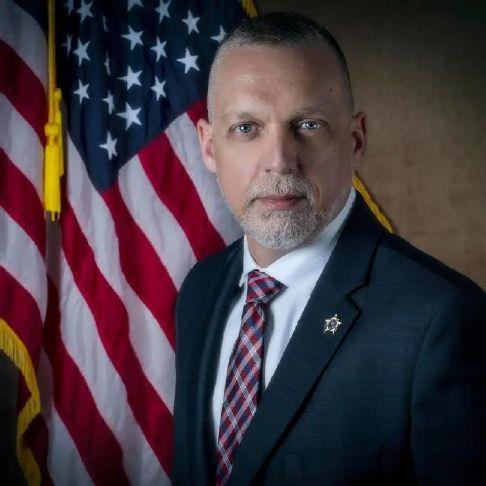
Mark Heyungs, a Warren County Sheriff’s Office deputy who was suspended without pay in December and who is now running for sheriff against current Sheriff Brett Hightower, is currently facing proceedings that could lead to his termination.
Warren County Sheriff Brett Hightower is presiding over an administrative hearing that began Wednesday at the Warren County Justice Center.
Witnesses gave testimony Wednesday afternoon, and the hearing resumes Thursday afternoon with closing arguments from Warren County Attorney Amy Chandler and Heyungs’ attorney, David Agnew.
Heyungs was suspended without pay and recommended for termination on Dec. 12 after what Chief Deputy Maj. Kevin Wiles testified was a series of infractions over a period of several months that did not promote efficiency within the office and violated written policies.
Wiles said that those concerning actions included not staying in radio contact while running after a suspect, failing to secure the crime scene after a deadly shooting, refusing to leave a Glen Lily Road property after being asked to do so when he stopped to investigate a yard sale and taking the cell phone of a motorist he had pulled over despite lacking reasonable suspicion to seize the phone.
During his testimony, Wiles also pointed out a number of additional incidents that did not result at the time in discipline against Heyungs but ultimately contributed to the decision to suspend him and recommend his firing.
“It was becoming apparent to me that any further retention of him would be negligent,” Wiles said Wednesday about the decision to recommend Heyungs for termination, which Wiles said was supported by Hightower. “I can only suppose that when (Heyungs) was promoted to sergeant, the job itself was more than his capabilities could handle … these were significant failures that didn’t show up prior to his promotion.”
Under procedures set out in state law, Heyungs could have either accepted termination, offered to resign or contested the termination notice through an administrative hearing, in which the sheriff sits as ruling authority.
Heyungs, who largely denied wrongdoing when he testified Wedneday, also had the right under state law to request that the hearing be open to the public.
Weeks before his suspension, Heyungs filed as a candidate for sheriff and will be on the ballot against Hightower in the Republican primary this May.
Wiles said Heyungs’ candidacy did not figure into the decision to suspend him without pay and that Hightower had declined to fire him once he filed for political office as an opponent.
Wiles said that Heyungs, who came to WCSO after a career in the U.S. Army as a military police officer, received glowing evaluations from the time of his hire in 2021 until the end of 2024, when he was promoted in rank to sergeant after being transferred to the criminal investigations department to work as a detective.
In July 2024, Heyungs spoke with Wiles about what the detective said was a hostile work environment in the criminal investigations division, marked by a lack of communication and a sense of mistrust among employees.
Wiles said this led to Hightower sending a questionnaire to all detectives that ultimately led to the production of a document that set out rules and expectations for the detectives and articulated rules of office etiquette detectives were expected to follow.
Heyungs testified he felt it was necessary to share his concerns about what he said he was seeing from other detectives.
“There was a lot of work not getting done, a lot of horseplay going on,” Heyungs said. “The horseplay and theft of time was causing a problem … I just wanted to do my job and set an example and hoped it would be good enough but it wasn’t. I didn’t want to formally complain about it, but something had to happen.”
Heyungs testified that nothing changed with criminal investigations after written guidance was issued.
Chase raises concerns
On March 21, then-Sgt. Heyungs arrested a man following a foot pursuit.
Shortly after the pursuit began, Wiles said Heyungs informed dispatchers over police radio that he was running after a suspect in the area of Russellville Road and Dishman Lane.
That location turned out to be inaccurate — the pursuit was in the area of Russellville Road and Emmett Avenue, and Wiles said that Heyungs did not respond to officials during the pursuit with other information, such as a description of the suspect, a more accurate location or whether the suspect was armed.
“I get on the radio and ask Mark why are we chasing this person,” Wiles said. “He doesn’t respond, so everybody’s very concerned. If there’s no information forwarded, these first responders are going to think that deputy is in a fight for their life.”
Wiles said Heyungs “missed the mark” with his actions during the pursuit, and he was instructed on improving his communications for future events.
Heyungs testified that he attempted to communicate during the pursuit, but there was too much radio traffic for him to get through.
“When the chief deputy tried to call me, I was literally hands-on with the suspect…putting him in handcuffs,” Heyungs said.
Yard sale causes headache
Wiles said the office received significant fallout after a May 17 incident in which Heyungs investigated a yard sale on Glen Lily Road and video footage of the incident “became quite a social point of interest” when it was posted online.
Heyungs testified that he was on patrol when he stopped at the home after noticing that the products out for sale — mostly detergents and other household items — were still in their original packaging.
“The city has a big problem with shoplifting, it’s a daily occurrence,” Heyungs said, adding that he stopped at the home after receiving information from a Bowling Green Police Department officer that “more than just shoplifting” was happening at the address.
The man at the residence, who recorded the exchange with Heyungs on his cell phone as they stood on the front porch, refused to identify himself. Heyungs informed the man that he was being detained.
After about 40 minutes, the man’s girlfriend arrived at the house with more products and told Heyungs she was a couponer who bought goods that she stocked for yard sales, providing receipts.
Wiles said that Heyungs called on another deputy, and that a BGPD officer also came to the scene, but no one was charged with a crime.
Wiles said that had Heyungs had “no legal justification” to remain on the property after being told by the man there to leave.
After the video was posted online as what was described as an example of police abuse of power, sworn officers and dispatchers fielded hundreds of angry calls and emails about the incident, and deputies were given remedial training on Constitutional law, Wiles said.
“We do not want deputies on a regular basis going to yard sales to investigate the products that are being sold,” Wiles said. “When the gentleman said ‘get off my property,’ (Heyungs) should have left the property, period. It was a violation of that gentleman’s Constitutional rights.”
During cross-examination, Chandler asked Heyungs if the incident could have been handled better.
“Monday morning quarterbacking is a dangerous road,” Heyungs said. “I’m not perfect, we do the best we can … I think we could do things better, but I don’t think there’s any way that gentleman was going to be nice.”
Shooting highlights shortcomings
Following some minor incidents in which Heyungs was alleged to have failed to communicate promptly or properly with officers higher up in the chain of command on certain matters, Heyungs’ response to a Sept. 13 homicide investigation on Eastern Heights Avenue crystallized for Wiles his primary concern about Heyungs.
Heyungs and several deputies responded to the scene of the shooting, a chaotic situation in an apartment complex.
Wiles testified that Heyungs failed to secure the scene, diminish the chaos and establish control, and that it required Hightower personally driving out to Eastern Heights to secure the scene himself after about 40 minutes.
It was after that incident that Wiles said it appeared to him that Heyungs did not need to be a sergeant, leading to his demotion back to deputy.
“I began to formulate the recommendation (for demotion),” Wiles said. “It appeared he is out of his depth and this is beyond his capabilities.”
Heyungs testified that the crime scene covered a massive amount of ground and that he was also working to identify a vehicle that reportedly left the scene just after the shooting and interview witnesses.
Several minutes before Hightower arrived, WCSO Captain Brian Kitchens came to the scene, and Heyungs said that from there the crime scene was under Kitchens’ control.
“I briefed him on what was going on and we worked as a team the best we could,” Heyungs said.
Traffic stop leads to termination paperwork
Heyungs stopped a motorist on Dec. 7 in the area of Scottsville Road and Three Springs Road for a pair of moving violations.
During the stop, Heyungs was notified that the driver was the subject of a criminal summons charging him with attempted video voyeurism, a case that was investigated by the Western Kentucky University Police Department.
The driver was served with the summons, and Heyungs asked the man for his cell phone. Police body camera footage shown at the hearing depicts the man talking on the phone when Heyungs asks for it.
Heyungs contacted a WCSO dispatcher, who then radioed a WKUPD dispatcher who got in touch with a campus police officer about the phone.
Heyungs brought the phone to WKUPD headquarters, and the following day it was brought back to its owner.
Wiles said that Heyungs had “no justification at all” to seize the phone, saying that the criminal summons did not contain enough information to support the deputy seizing the phone and that Heyungs did not contact the WKUPD officer who wrote the summons.
The incident caused confusion for WKUPD Chief Mitch Walker, who said that the department had largely completed its investigation into the attempted voyeurism allegations and had previously seized a phone for evidence.
“There was not justification for the seizure of the phone based on very limited information in the criminal summons nine months after the (attempted voyeurism) incident occurred,” Wiles said.
Heyungs said the summons mentioned that a second cell phone was alleged to have been used in the attempted voyeurism case, which is still pending.
Heyungs said he had reasonable suspicion to believe that the phone he seized was “potential evidence” of a crime and that the owner consented to giving the phone.
“I expected (WKUPD) to attempt to get a search warrant for it,” Heyungs said of the phone.
Agnew, who has maintained that the deputy has not done anything to warrant termination, called four other witnesses in addition to Heyungs to support his case.


Best of Best Winners