Judge rules against man convicted in La Placita murder
Published 5:00 am Monday, January 5, 2026
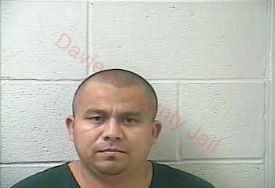
A judge has recommended denying the request to vacate the conviction of a man serving nearly 40 years for his role in the deadly shooting at La Placita market.
U.S. District Court Magistrate Judge Brent Brennenstuhl issued his report and recommendations on Tuesday regarding a motion from Jorge Caballero-Melgar to vacate his conviction for crimes connected to the 2017 robbery at the store on Morgantown Road, during which a bystander, 31-year-old Jose Cruz, was shot and killed.
A jury found Caballero-Melgar, 41, guilty in 2021 of murder through the use of a firearm during a crime of violence, robbery, conspiracy to commit robbery, conspiracy to carry or possess a firearm during a crime of violence and illegal re-entry after deportation.
Evidence at trial established that Caballero-Melgar was part of a group of people who carried out robberies of multiple primarily Hispanic-owned businesses in Kentucky, Tennessee and North Carolina, and that he supplied his co-defendants with firearms ahead of the La Placita robbery, drove the co-defendants and waited in the car while the crime was carried out.
Caballero-Melgar was sentenced to 460 months in prison – 38 years and four months – and the U.S. Court of Appeals for the 6th Circuit upheld his conviction in a 2023 ruling.
In 2024, though, Caballero-Melgar filed a motion on his own behalf to vacate the conviction, contending that his legal team led by attorney Bryce Caldwell provided ineffective assistance.
Through a series of court filings and an evidentiary hearing held last year, Caballero-Melgar and his court-appointed attorney, Dawn McCauley, argued that Caldwell failed to adequately explain before Caballero-Melgar’s trial the legal concept of accomplice liability, in which a person can be found guilty of murder when an accomplice during a crime actually commits the homicide.
Caballero-Melgar also claimed that Caldwell’s declining to cross-examine six prosecution witnesses and brief cross-examinations of three previously convicted co-conspirators at the trial also amounted to ineffective assistance of counsel.
Attorneys representing the federal government countered by arguing that Caballero-Melgar had not identified any errors that would have merited his conviction being overturned.
In Brennenstuhl’s report, he noted that Caldwell testified during last year’s evidentiary hearing that a Spanish-speaking interpreter was used during each of his communications with Caballero-Melgar and that his client seemed to have a difficult time understanding the concept of accomplice liability, even after providing examples.
Caballero-Melgar also testified at the hearing that he struggled to understand how he could have been charged with murder when he was not in the store during the shooting, according to court records.
Brennenstuhl also mentioned that Caballero-Melgar had requested that Caldwell be dismissed as his attorney four days before the trial based in part on his refusal to file a motion from Caballero-Melgar to dismiss the murder charge against him, but Caballero-Melgar ultimately informed U.S. District Judge Greg Stivers at the hearing just before trial that it was his decision to go to trial because he did not want to plead guilty to murder.
The judge found that Caldwell “provided Caballero-Melgar with sound, accurate and understandable advice” regarding accomplice liability that would have allowed the defendant to make an informed decision on whether to go to trial or accept a plea offer from federal prosecutors that recommended a sentence of 26 years and three months.
“Caballero-Melgar’s motivation for seeking appointment of new counsel and his evidentiary hearing admission suggest he had a disagreement with the law, as opposed to a lack of understanding,” Brennenstuhl said in his report.
Brennenstuhl also found that Caballero-Melgar confirmed it was his decision to go to trial because he was unwilling to sign a plea agreement that included an admission of guilt to murder and a sentence of more than 20 years, and thus had not shown he would have accepted the offer if he had been appointed a new attorney.
According to court records, Caldwell testified that his decision not to cross-examine multiple law enforcement witnesses at the 2021 trial was a legal strategy undertaken because he felt questioning the witnesses would not have helped Caballero-Melgar’s case.
Caldwell also noted that his strategy focused on attacking the motives of Caballero-Melgar’s co-defendants in taking plea agreements and that the overall trial strategy focused on mitigating his client’s punishment “because there was not a realistic expectation of acquittal.”
Brennenstuhl found that Caballero-Melgar failed to show that Caldwell’s actions concerning trial strategy amounted to ineffective assistance and did not identify specific questions his lawyer could have asked that would have planted reasonable doubt in the minds of the jury that convicted him.
The judge’s report will be submitted to Stivers for a final ruling.
In addition to recommending that Caballero-Melgar’s motion be denied, Brennenstuhl also recommended that no certificate be issued enabling Caballero-Melgar to appeal the ruling against him.



Best of Best Winners