Community celebrates values at Kwanzaa gathering
Published 2:02 am Friday, January 2, 2026
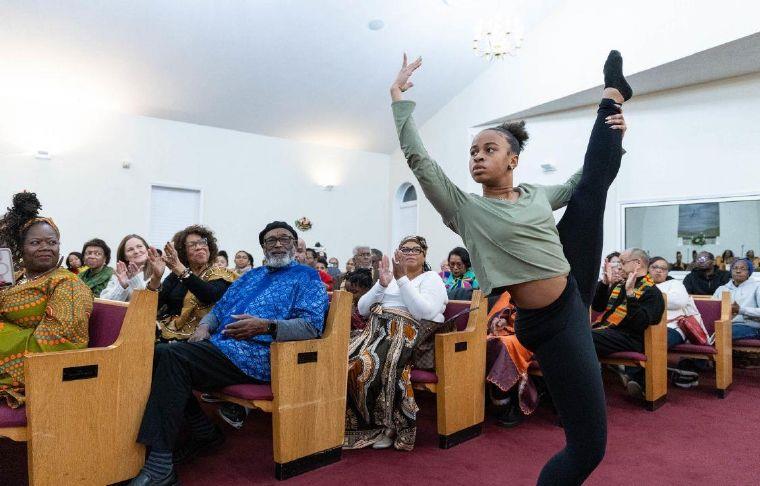
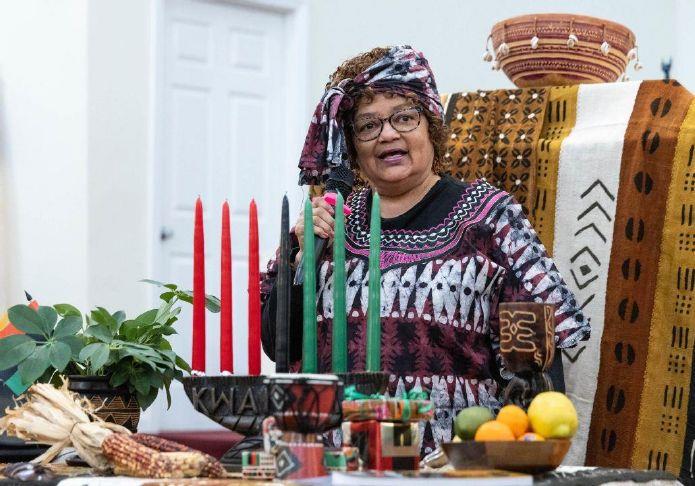
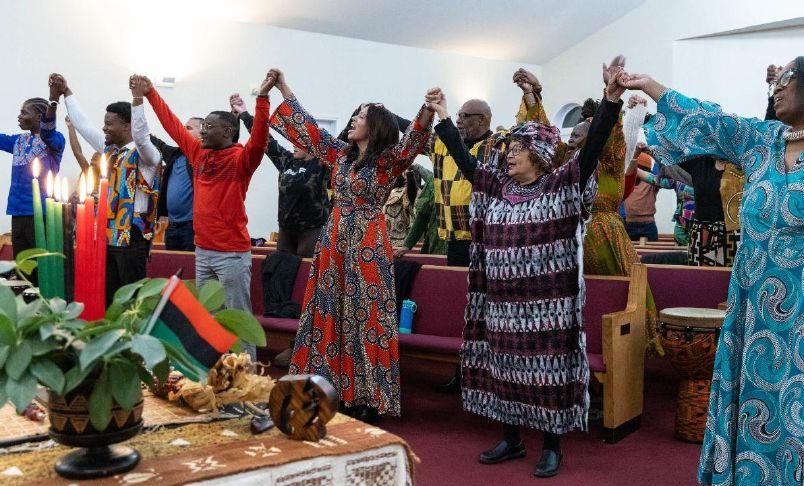
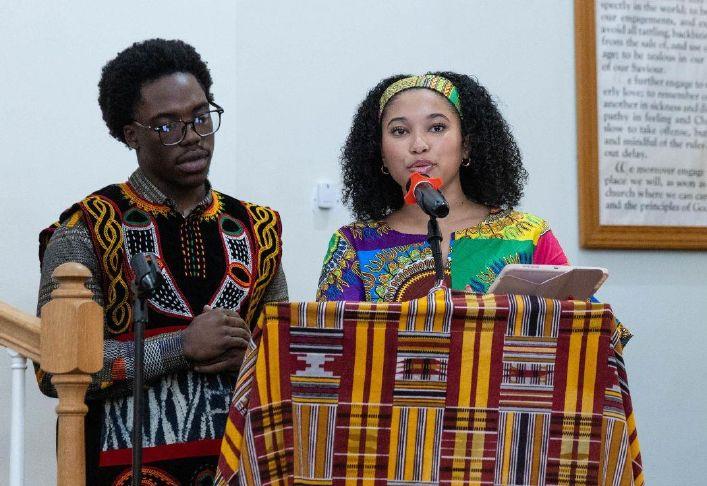
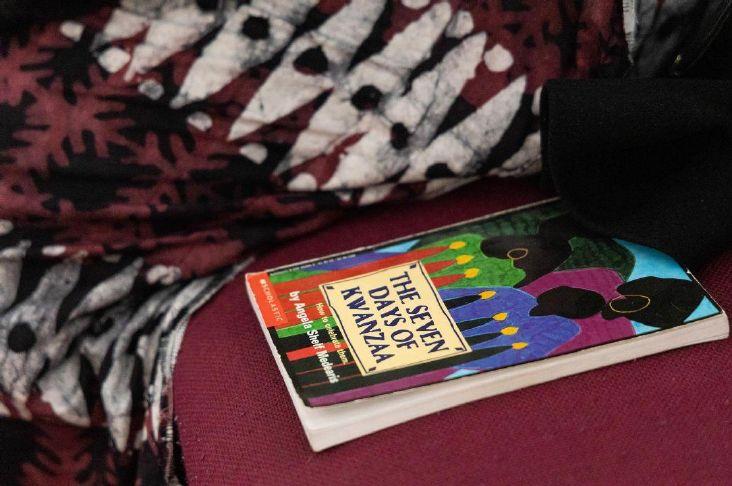
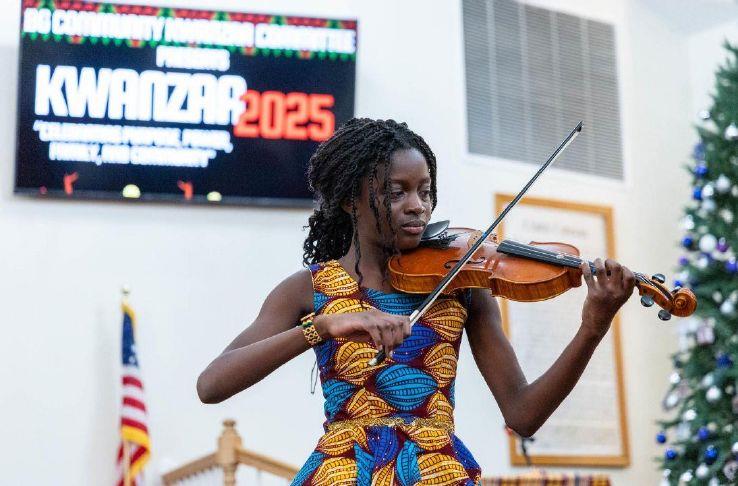
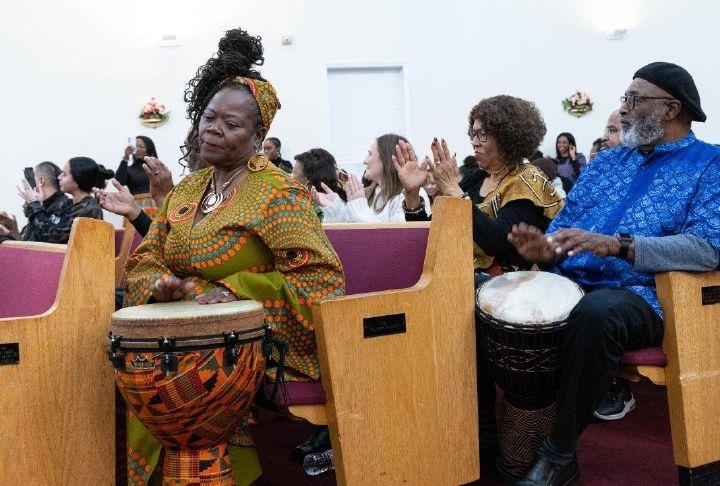
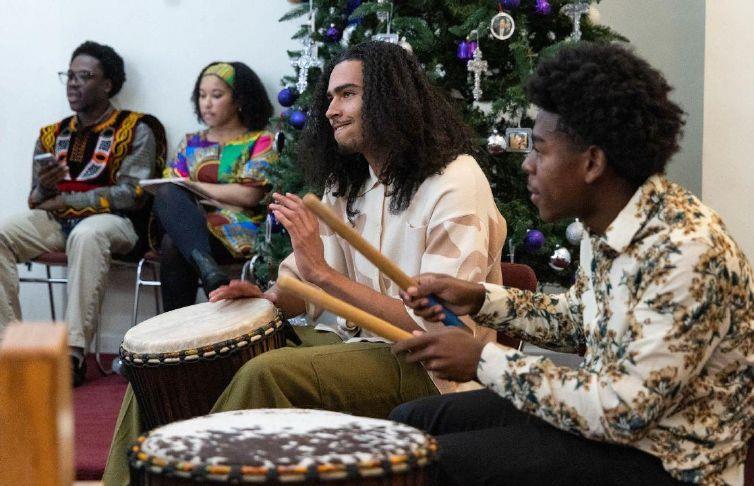
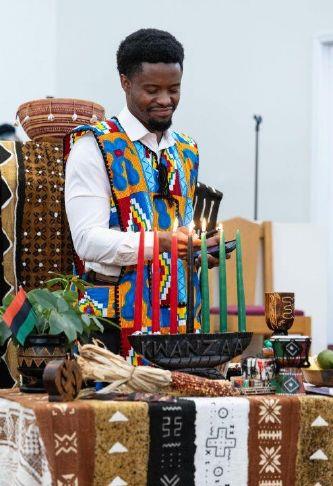
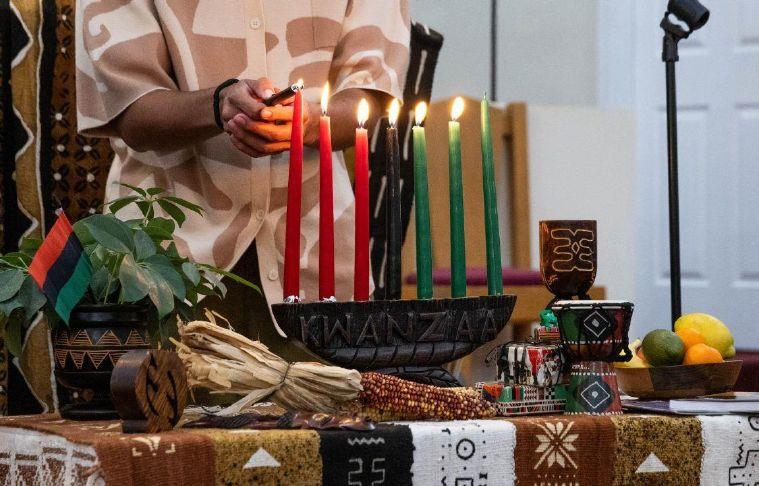
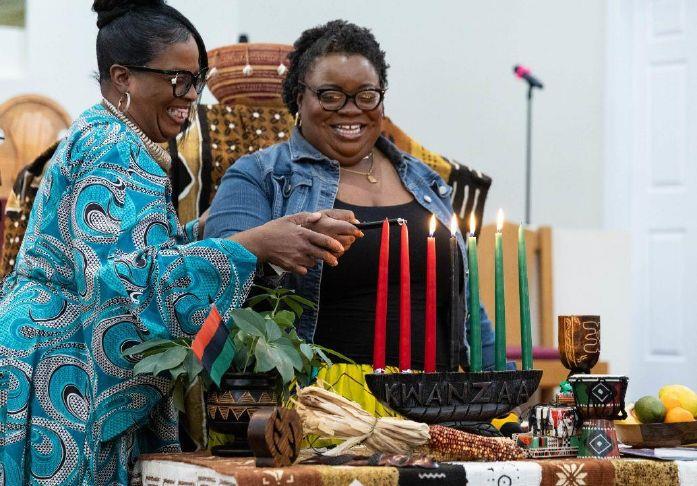
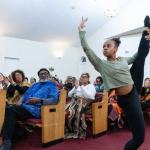
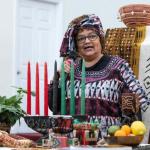
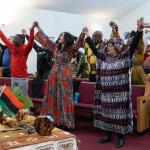
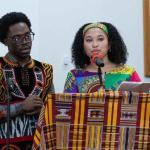

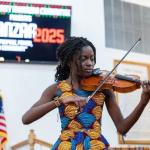
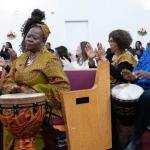
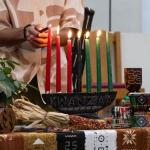
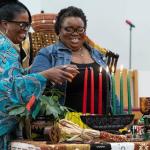
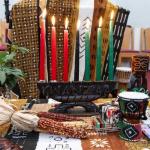
Community members Tuesday filled the pews at 11th Street Baptist Church, as residents shared personal stories and performances to celebrate the African-American holiday Kwanzaa.
Kwanzaa, which takes place Dec. 26 to Jan. 1, in part entails discussing one of seven principles each day: unity, self-determination, collective work and responsibility, cooperative economics, purpose, creativity, and faith. In Bowling Green, residents have for 24 years held an annual, one-day public celebration at a local church — a holiday explainer and a taste of the lived meaning behind its principles.
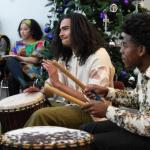
On Tuesday, this looked like a community member speaking about how she found renewed purpose after her mother died this year. It looked like local youth playing the violin, dancing down the center aisle or performing in another way to an enraptured audience. It looked like attendees rattling musical shakers and clapping to a beat struck up by young college students and youth, before all were invited to share a meal in the back.
“It is our youth that will carry the future,” said Cassandra Little, who celebrated Kwanzaa in her home in the ’90s, like other locals, before they worked to expand the event to churches. “It is our ancestors that have shown the way through their past actions. We have lost people, and there are people whose names we do not know — all of the people that have made sacrifices; people are praying for us that we don’t even know are praying for us.
“And so, with the kids too, we tell you: You are the future. We want you to help carry the traditions. So, be the best people that you can be. God is love. And we all love you.”
While Kwanzaa can be celebrated by anyone, its roots are African American: Activist, scholar and author Maulana Karenga had developed the holiday to help African-Americans reestablish culture and elements tied to it, including family and language, that were disconnected or lost to slavery and other discriminatory practices like segregation, Little said. The seven communal principles are values common in multiple cultures expressed in different languages across east Africa, former Western Kentucky University history professor John Hardin said.
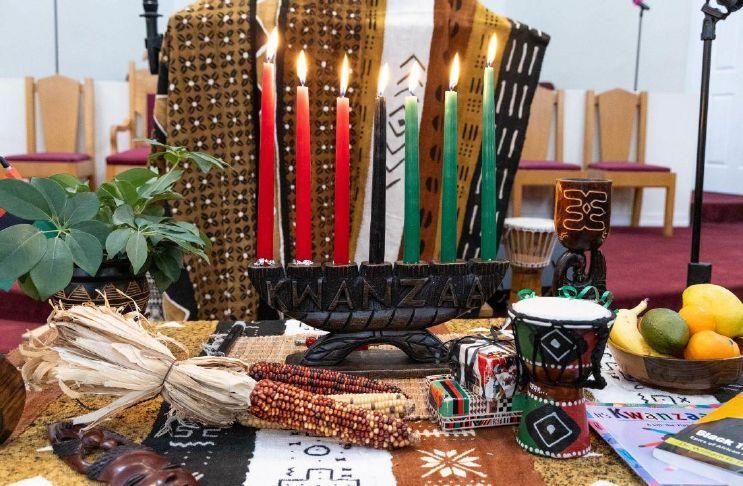
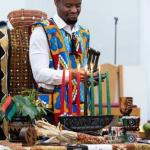
Little explained to the audience the Kwanzaa table — a setting for family to together reflect on their history and ancestors: a traditional mat laid over it represents the foundation that the family and celebration grow upon; a candleholder has seven candles for the principles — black representing the African skin color, and then red and green alternating to represent the cycle of struggle and prosperity; an ear of corn for each child, or a bunch for a crowd, represents harvest to be shared so no one starves; gifts are often educational, handmade and inexpensive, such as books, crafts or puzzles for the family to share.
The first principle, called umoja, serves as a reminder of the importance of unity in a family, community and culture — “standing together, supporting one another and moving forward as one,” said Felicia Bland, who’s long been active in the community, including as a Housing Authority service coordinator and a member of Girl Scouts of Kentuckiana serving underserved and at-risk girls.
Kujichagulia, or self-determination, means “the ability to define ourselves, speak for ourselves and act on behalf of our community,” Greenwood High freshman Donovan Hatchett said.
He described contributing to local charities, such as food pantries, through his time at the youth program Jonesville Academy.
“What I believe can cause change in our community are actions of self determination … This includes advocating for what we want, giving to those less fortunate and making sure our voices are heard when other people want them to be silenced.”
Toya Carpenter, owner of the Bowling Green sober living home Pita’s Place, described ujima, or collective work and responsibility, as a call to build and maintain community together, recognizing that each person’s well being is tied to the well being of all.
“It reminds us that healing, growth and accountability are not meant to be carried alone, but shared through intentional support, service and love,” Carpenter added. “At Pita’s Place, ujima is lived out daily. Our home is built on sisterhood: where women in recovery uplift one another, hold each other accountable and celebrate progress together.”
Vivian, house manager at Pita’s Place, described it as enabling her to become stronger and overcome drugs, alcohol and depression.
“It takes a village of recovery to build us back,” Vivian said. “I live today in my own truth and plan to pass that on to all women who come in and out of that house.”
John Bosco, from Fifth Third Bank, described ujamaa, cooperative economics, as an economic system for and by the people.
“Ujamaa reminds us that our strength grows when we support one another,” Bosco said. “In our community, ujamaa looks like mentorship, it looks like collaboration, it looks like making decisions that uplift everyone and not just one person.
It challenges us to do two things: first, to work toward becoming and creating what we need and what we want within our communities; and secondly, if you can’t do the first one, always look within your community first for anything you need regardless of cost or convenience.”
Danielle Brown, a community leader, spoke about finding purpose in grief after losing her mother this year.
“If you’ve ever lost someone that was your safe space, full of grace, your sounding board, your prayer partner and warrior, your soft landing that kept you standing, then you know that grief ain’t quiet … It steals your breath at red lights and in grocery store aisles and in endless nights and in simple moments that you did not prepare for,” she said. “But purpose whispered back to me as only she could … Among the great cloud of witnesses, she is the quiet strength in my spine, the voice that steadies me and tells me to hold the line. It’s too soon to quit. Purpose is born through the pain. I didn’t choose this season, but I can choose what to do with it.
I choose to build where it hurts, choose to love a little louder, I choose to shine the light of God’s great splendor, I choose to show up when my heart is very, very tender.”
Community organizer Barbara Pollock held a tribute to ancestors called a libation, pouring water into a plant, representing the Earth, from a unity cup before raising it to the four directions. After a unity statement, she and attendees called out names of the ancestors.
The Little Drummer Boys presented on kuumba, creativity, which group member Bobby Dye, a WKU sophomore, described as doing as much as possible to leave community more beautiful and beneficial.
The group, alongside WKU Counseling and Student Affairs Associate Professor Lacretia Dye, led the church in an improvised, collaborative drum piece.
Then, Lacretia Dye spoke on imani — “faith to believe with all our hearts in our people, our parents, our teachers, our leaders and the righteousness and victory of our struggles.” Faith, for her, is found in people’s stories, she added: “Everybody has a story that inspires me. I can look at so many faces in this room right now, and it is my faith in you, and in this community, and how you continue us, that keeps me going.”
She recalled the story of her grandmother, who grew up in Mississippi and left school in sixth grade to work in cotton fields. Her grandmother had four babies with a husband who was taken by the discriminatory Jim Crow laws, and then four more with a second husband, who became abusive, Lacretia Dye said.
Her grandmother escaped in the middle of the night with her eight babies in a U-Haul to her sister’s house in Illinois. There, she cooked at the Central Illinois Center for Treatment of Addictions — and worked her way up over the years, eventually running the facility.
“We need stories like we need food,” Lacretia Dye said. “It’s her story that I have faith that I can keep going.”


Best of Best Winners